

Coordinating print-on-demand orders, inventory, and multi-marketplace fulfillment becomes unmanageable when software restricts automation, requires separate dashboards, or lacks integration with key print providers. Many platforms demand expensive setup fees, lock advanced features like multi-channel publishing or API access behind top-tier plans, and withhold transparent pricing details that make vendor selection harder for growing brands. This article compares pricing models, automation features, and integration depth across four leading print-on-demand operations software options so you can pick the one that matches your shop volume and workflow demands without a trial-and-error investment.
Table of Contents
- Pythias Technologies
- DodgePrint
- OrderMesh
- Prodigi
- Comparative Analysis of Print-on-Demand Operations Software
Pythias Technologies
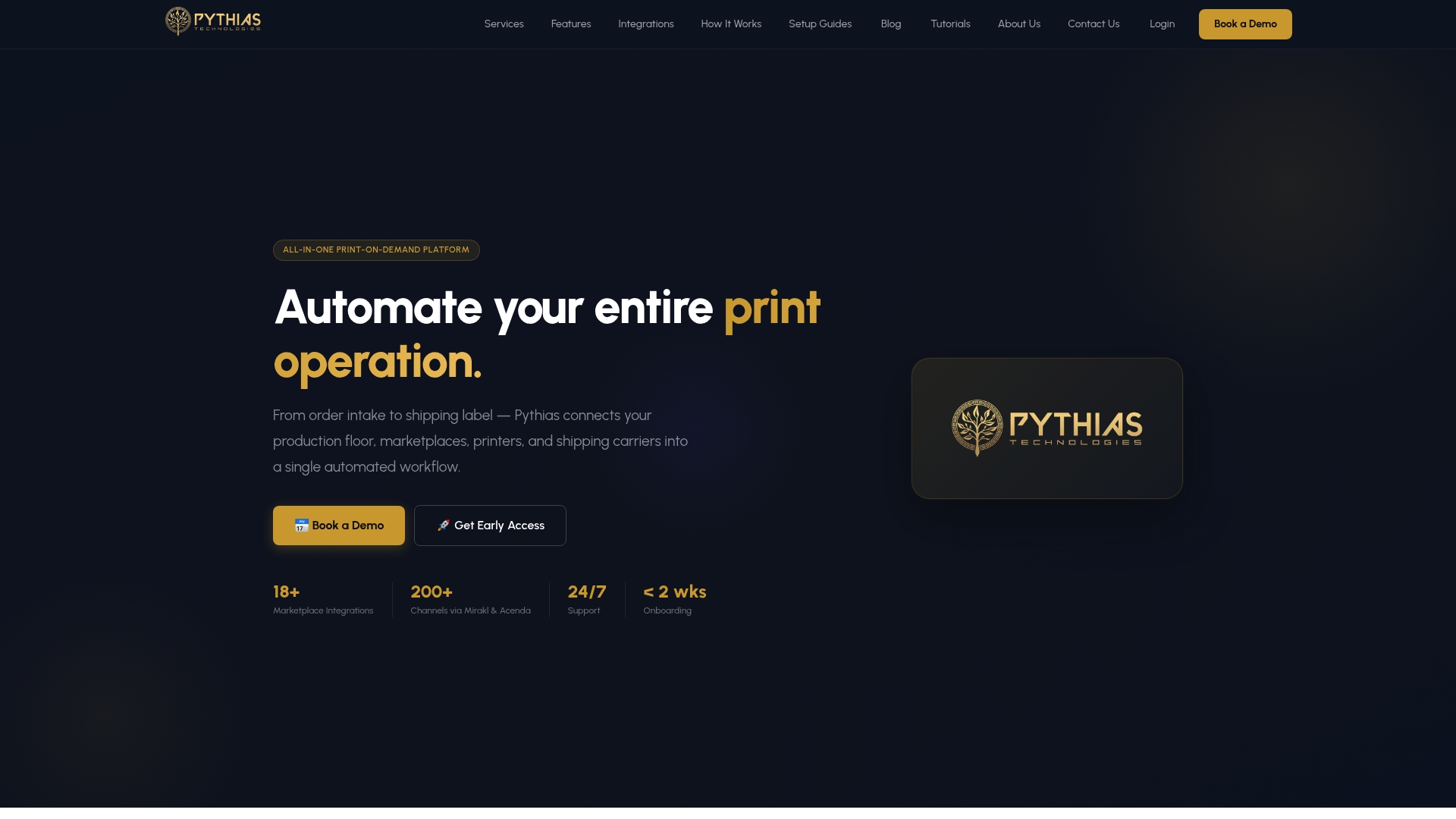
At a Glance
According to the company, onboarding completes in under two weeks with dedicated support, a specific claim that shortens time-to-live for shops replacing manual workflows. The platform unifies production, marketplaces, carriers, inventory, and analytics into a single operational surface.
Core Features
-
Automated production queue management for DTF, embroidery, sublimation, and screen printing, with label and barcode printing from the dashboard.
-
Real-time inventory and stock control with reorder alerts and tracking visibility from order to delivery.
-
Unified order management that pulls orders from Amazon, Etsy, Shopify, Walmart, TikTok Shop and other channels into a single dashboard.
-
Built-in shift management, role-based access, and exports for output and efficiency reporting.
Key Differentiator
The product’s central claim is an all-in-one approach that ties production floor automation to marketplace and carrier workflows while backing the rollout with hands-on onboarding. That onboarding claim is the practical lever that converts an integration project into an operational cutover.
Pros
-
Comprehensive automation reduces touchpoints between order entry and shipping, which lowers manual errors and accelerates throughput.
-
Quick setup backed by the vendor speeds time to production for new shops, helping you start accepting live orders faster than typical integrations.
-
Real-time analytics provide exports and efficiency metrics that let managers measure output by shift and operator.
-
Broad channel support, including major marketplaces and retail platforms, centralizes sales without maintaining separate dashboards.
-
24/7 support with a U.S.-based team is offered, which helps when printers or shipping labels need immediate troubleshooting.
Cons
- Pricing is not publicly disclosed, and the sales process requires contact for a quote, which may be a barrier for smaller shops seeking transparent per-month pricing.
Notable Integrations
-
Printers: Brother GTX printers and other production hardware.
-
Carriers: USPS, FedEx, UPS for label creation and tracking sync.
-
Marketplaces and storefronts: Amazon, Etsy, Walmart, Shopify, TikTok Shop, eBay, Wayfair, SHEIN, Temu, Meta Shops, Wix, WooCommerce, Squarespace, and more listed by the vendor.
Who It’s For
Medium to large print-on-demand brands, white label apparel suppliers, and print shops that operate multiple sales channels and need a single system to manage production, inventory, and shipping. Not aimed at sole proprietors who prefer pay-as-you-go pricing.
Unique Value Proposition
Onboarding in under two weeks with dedicated support turns what is often a months-long IT and ops project into a short ramp. For teams that must keep production running while migrating channels, that speed reduces downtime and accelerates revenue capture from day one.
Real World Use Case
A regional print shop connects Etsy, Shopify, and Amazon, routes orders through Pythias Technologies to the appropriate production line, generates carrier labels automatically, and uses the dashboard to rebalance inventory when stock levels fall below reorder thresholds.
Pricing
Pricing is not published online. The vendor requests contact for custom quotes, which suggests enterprise or tiered subscription models rather than a simple per-seat plan. Expect a discovery call and a tailored proposal.
Website: https://pythiastechnologies.com
DodgePrint

At a Glance
The vendor advertises integrations with over 34 print providers and major channels and claims it can cut listing time by up to 80%. That combination is aimed at sellers who publish widely and need fewer manual steps when launching SKUs.
DodgePrint presents the entire print-on-demand flow in one dashboard, from cataloging designs to routing orders and reviewing campaign performance.
Core Features
- Smart Catalog for organizing, tagging, and reusing designs across products and channels.
- Bulk Listing that publishes many SKUs to multiple marketplaces at once and supports scheduled launches.
- Order Management centralizes orders, automatic routing to suppliers, and a single fulfillment status view.
There is also an analytics dashboard and an AI Optimization suite that generates listings, suggests SEO improvements, and analyzes reviews for insights.
Key Differentiator
DodgePrint combines broad supplier connectivity with AI-assisted listing tools so you can manage multi-channel catalogs from a single pane. That fusion targets sellers who want fewer vendor touchpoints and automated listing work without stitching several tools together.
Pros
- Automates repetitive tasks across listing and order flows, which reduces manual entry and frees time for product testing.
- Multi-channel publishing means you can push a single SKU out to Etsy, Shopify, Amazon, and social channels from the same job.
- Built-in analytics offer SKU-level profit tracking and channel performance data so you base decisions on numbers rather than hunches.
- Platform is presented as approachable for new sellers while providing enough depth for experienced operators who manage large catalogs.
- Supports routing to many print suppliers, which lowers single-supplier risk and gives options for regional fulfillment.
Cons
- Few third-party reviews exist, so user experience insights rely heavily on vendor statements and early adopter feedback.
- Pricing scales with shop volume; the vendor notes higher costs for larger operations, which can add up for high-volume sellers.
- Advanced capabilities such as API access and custom integrations sit behind higher-tier plans, limiting some technical workflows on lower tiers.
When It May Not Fit
If you require an independently reviewed track record before committing, DodgePrint’s limited third-party coverage makes adoption a more cautious decision.
Large enterprises with bespoke integration needs that demand open API access out of the gate may find the platform restrictive until they move to top-tier plans.
Notable Integrations
- CustomCat
- Dreamship
- Duplium
- Gearlaunch
- Gearment
- Gelato
- Gooten
- Jondo",“Lenful”,“Mangotee Prints”,“Merchize”,“Monster Digital”,“MWW On Demand”,“OPT OnDemand”,“Pentifine”,“Print Clever”,“Printful”,“Print Geek”,“Printify”,“Printik”,“Printsel”,“Printway”,“Prodigi”,“ShineOn”,“Spoke custom”,“Teelaunch”,“Tshirt & Sons”
Who It’s For
Small to large print-on-demand sellers who publish across multiple marketplaces and want automation for listings, fulfillment routing, and analytics. It suits operators looking to reduce headcount growth tied to manual operations and those testing many SKUs across channels.
Real World Use Case
A POD seller uses DodgePrint to manage a 1,200-SKU catalog, bulk-listing seasonal variants to Shopify and Etsy, then routing orders automatically to the nearest supplier. The team uses the analytics view to kill low-margin designs within weeks rather than months.
Pricing
Free tier available. Paid tiers start at $8/shop/month for Starter and $15/shop/month for Professional. Enterprise pricing is custom and negotiable for high-volume or bespoke needs.
Website: https://dodgeprint.com
OrderMesh
At a Glance
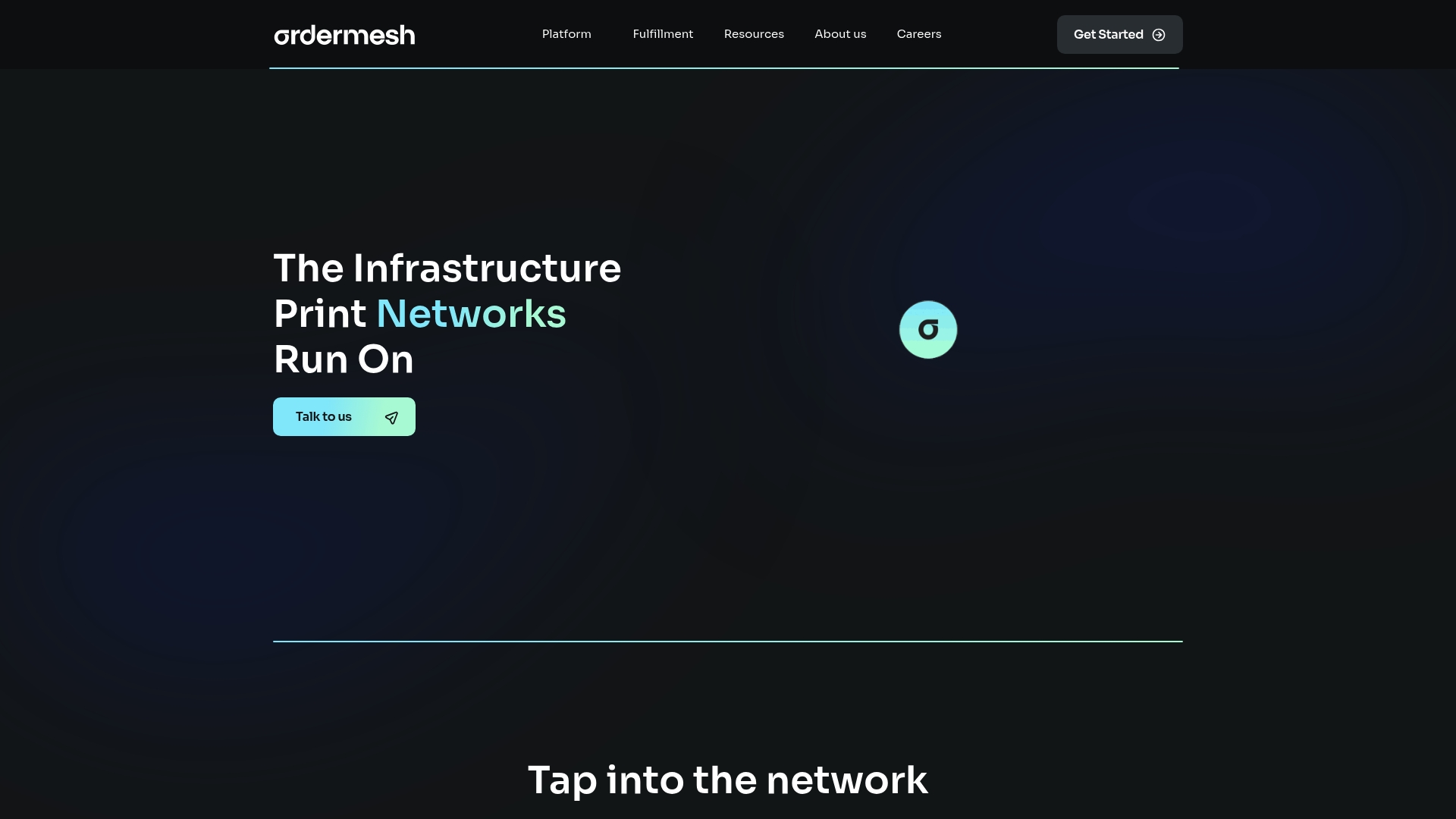
OrderMesh positions itself as an AI-native, cloud-native, multi-tenant engine for print-on-demand order orchestration and vendor network management. The vendor states it is SOC 2 compliant, a security claim referenced in the product materials.
OrderMesh targets scale: the platform advertises multi-variable routing, mixed-channel fulfillment, and product data normalization for large SKU sets.
Core Features
- End-to-end order management with front-end integration, exception handling, and an order hub for centralized visibility.
- Advanced order routing that optimizes for speed, cost, geography, and inventory across vendors and locations.
- Mixed-channel fulfillment combining warehouse, print-on-demand, and drop-ship flows plus multi-channel orchestration.
- Product data normalization for large SKU catalogs so different vendor feeds cleanly map to a single catalog.
Key Differentiator
OrderMesh leans heavily into AI-native architecture as its central claim and builds routing logic with multi-variable optimization. That focus aims to make dynamic re-routing and mixed-channel fulfillment routine rather than manual.
Pros
- Comprehensive coverage for print-on-demand operations, from vendor onboarding to exception handling, which reduces back-and-forth for complex orders.
- Robust API surface designed for existing tech stacks, so you can integrate the order hub with your storefront, ERP, or custom middleware.
- Supports multi-channel routing and mixed fulfillment strategies, useful when you run a global supplier network and local warehouses.
- The platform is framed for future capabilities around AI-driven optimization, which may help automated routing decisions as volumes grow.
- That SOC 2 claim above is relevant for enterprise procurement teams reviewing security posture.
Cons
- Setup will likely require technical resources. The platform’s depth brings configuration and integration overhead that smaller teams can find heavy.
- Pricing is not published for self-service evaluation, so total cost estimates require vendor engagement and a technical scoping exercise.
- Public third-party reviews were not available in the supplied data, so independent user feedback is limited for due diligence.
When It May Not Fit
If you are a small headless store or a boutique POD seller with under a few hundred orders per month, the implementation effort and likely cost profile make OrderMesh a poor fit.
If you need a plug-and-play dashboard with minimal IT involvement, look elsewhere; OrderMesh assumes technical ownership or a systems integrator during rollout.
Who It’s For
Large and growing print-on-demand or eCommerce brands that must orchestrate many suppliers, normalize massive SKU catalogs, and apply routing logic across regions and channels.
Real World Use Case
A custom apparel brand connects multiple third-party printers and regional warehouses to OrderMesh, normalizes SKU data from each supplier, and uses the routing engine to send each order to the fastest, lowest-cost capable site while honoring inventory constraints.
Pricing
Public pricing is not available; the vendor lists pricing as informational only. Expect custom quotes based on order volume, integration scope, and support needs rather than a fixed self-serve tier.
Website: https://ordermesh.com
Prodigi
At a Glance
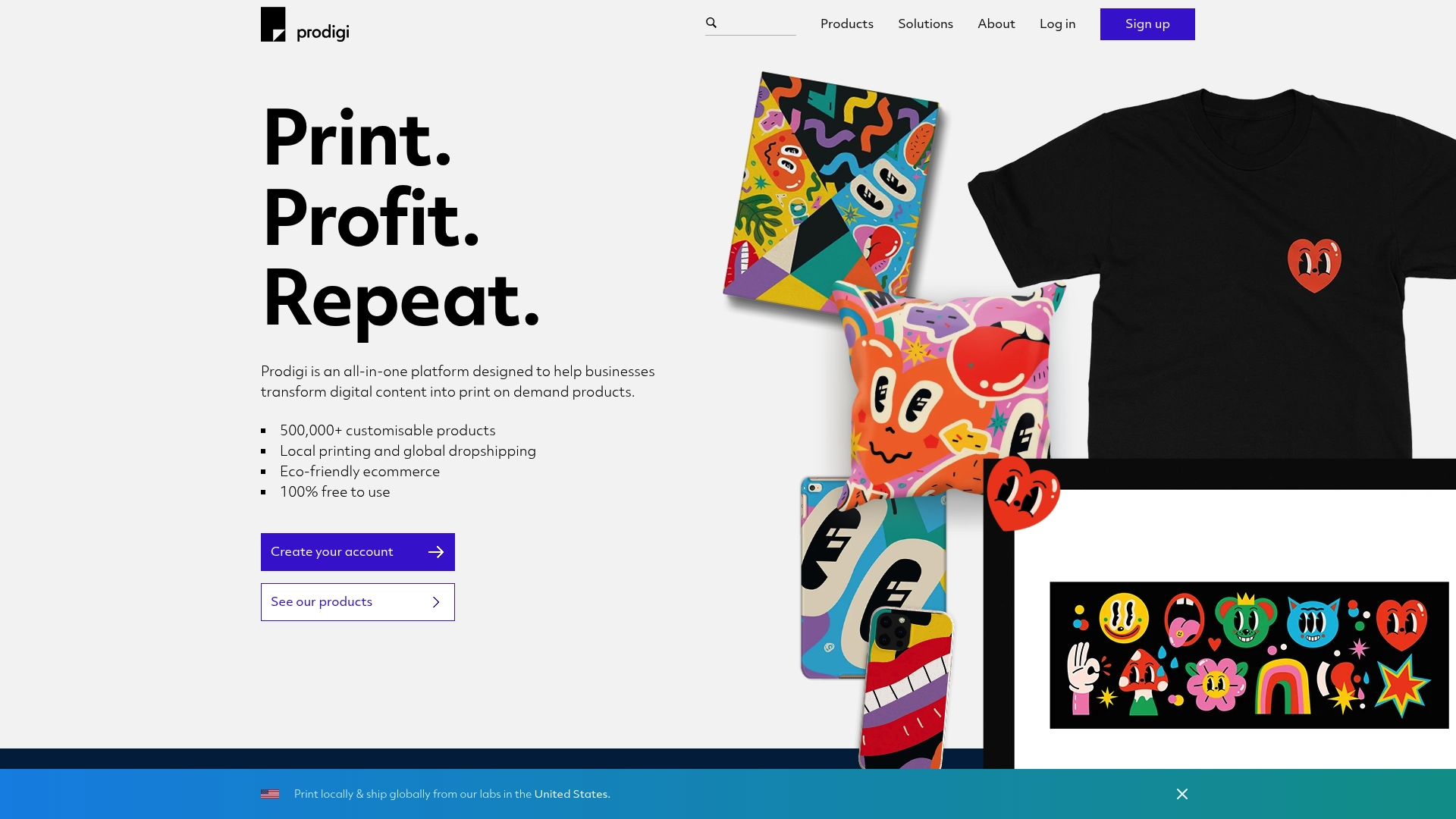
Prodigi’s marketing materials claim 500,000+ customizable products, a catalog size that lets creators test niche SKUs without inventory risk. The vendor also promotes a mixed local and global print network and positions the platform as eco conscious and free to use.
Core Features
Prodigi groups capabilities around product breadth and order automation.
- Wide catalog covering wall art, apparel, home decor, tech accessories, and more with many product variants.
- A global and local print network designed to shorten shipping distance and reduce waste through closer fulfillment.
- Print API for automated ordering and a manual order form plus CSV importers for bulk jobs.
- Native connectors for common storefront platforms to pass orders directly to production.
Key Differentiator
What sets Prodigi apart is the combination of catalog scale and its fulfillment topology. The product catalog claim above gives sellers room to experiment across categories. Paired with local print partners and the Print API, this mix supports faster, lower-mileage fulfillment compared with suppliers relying on a single region.
Pros
-
High-quality output for fine art and photographic prints. The platform is repeatedly praised for material choices and color fidelity.
-
Easy storefront connections. Sellers report smooth installs with major platforms, reducing the time between listing a product and taking orders.
-
Eco focused fulfillment. Local printing options reduce transit emissions for many orders and simplify returns for nearby customers.
-
No monthly fees. The free-to-use model removes upfront cost barriers for artists and small brands testing product lines.
-
Helpful support resources and onboarding materials. New sellers can follow stepwise documentation to configure common workflows.
Cons
-
Some users report shipping delays and delivery time inaccuracies that complicate customer expectations for premium items.
-
Quality control can vary between samples and full production runs, which creates risk when scaling limited edition prints.
-
Rolling prints sometimes show small edge curling on fine art pieces due to the vendor’s handling practices.
-
A few customers describe slower support response in peak seasons, making urgent issue resolution harder.
When It May Not Fit
If you sell high volume collections where every print must match a studio sample, Prodigi’s inconsistency between samples and bulk runs is a real risk. If guaranteed timed delivery windows matter for your brand, the reported shipping variability will also be a problem. Large retailers needing tight SLA commitments should look elsewhere.
Notable Integrations
Prodigi connects directly with common ecommerce platforms so orders flow automatically from storefront to production.
- Shopify
- Etsy
- WooCommerce
- Squarespace
- Wix
- BigCommerce
Who It’s For
Creative entrepreneurs, photographers, and small to mid ecommerce brands that want to expand product offerings without holding stock. It fits sellers who prioritize product variety and lower upfront cost over enterprise-grade delivery SLAs.
Real World Use Case
A photographer links a Shopify store to Prodigi, uses the Print API to automate incoming orders for canvas and framed prints, and opts for nearby print partners when available. Orders ship with reduced transit distance and the owner avoids warehouse overhead while offering worldwide fulfillment.
Website: https://prodigi.com
Comparative Analysis of Print-on-Demand Operations Software
Choosing the right platform for managing and optimizing print-on-demand operations involves evaluating specific features, scalability, and workflow benefits tailored to unique business needs.
Onboarding and Time-to-Live Comparison
When it comes to implementation speed, Pythias Technologies prominently highlights a dedicated support team that enables onboarding in under two weeks, ensuring rapid deployment for operational adaptation. In contrast, OrderMesh requires technical resources for setup, extending its initial deployment period. For businesses prioritizing quick operational startup while maintaining productivity, Pythias Technologies may be better suited, whereas OrderMesh’s detailed capabilities could justify the longer rollout.
Resource Management Efficiency
Efficient resource management is crucial for managing large and complex inventories. Pythias Technologies centralizes multiple operational aspects—such as production queues, carrier management, and real-time inventory—providing a highly convergent solution. Meanwhile, DodgePrint features AI and bulk listing tools optimized for managing extensive SKU catalogs. Companies focusing on inventory scales or detailed catalog structures could benefit from DodgePrint’s specialization while finding Pythias Technologies advantageous for integrated operations.
Best Fit Scenarios
- For businesses needing rapid onboarding and system adaptability to maintain productivity, Pythias Technologies is most suitable.
- Companies managing highly expansive SKU catalogs and requiring detailed listing optimizations might prefer DodgePrint.
- Organizations demanding intricate, multi-variable routing logic could choose OrderMesh for its advanced AI-native platform architecture.
- Creative professionals valuing variety and global-local fulfillment benefit greatly from the extensive catalog and flexible production approach of Prodigi.
Our Pick: Pythias Technologies
Pythias Technologies emerges as the foremost recommendation for businesses seeking integrated print-on-demand solutions that unify production management, inventory control, and multi-channel order facilitation. Its claim to onboard new clients and transition operations in a reduced timespan ensures reduced downtime and maximized operational continuity. However, organizations requiring ultra-customized routing setups may explore OrderMesh as an alternative. This balance between adaptability and specialization makes Pythias Technologies a compelling choice for advancing print-on-demand operations.
Print-On-Demand Operations Software Comparison
When selecting a print-on-demand management tool, consider platforms that best consolidate operations, optimize workflows, and provide the necessary integrations.
| Product | Key Features | Best For | Pricing | Notable Limitation |
|---|---|---|---|---|
| Pythias Technologies | Unified order and production management dashboard | Medium to large POD brands | Not disclosed | Requires contact for quoting, limiting immediate cost clarity |
| DodgePrint | AI tools for SKU automation and bulk listing | Small to large sellers | Starts at $8/mo | Limited external reviews, cautious adoption recommended |
| OrderMesh | AI-enabled multi-vendor routing and order orchestration | Large-scale operations | Not disclosed | Requires technical expertise, unsuitable for small-scale users |
| Prodigi | Extensive catalog of customizable products and local fulfillment | Creative entrepreneurs | Free to start | Variation in quality control between samples and bulk runs |
Discover a Powerful Alternative to PrintClever.com with Pythiastechnologies
If managing complex print-on-demand workflows while juggling marketplace sales and inventory feels overwhelming, Pythiastechnologies offers a solution designed just for you. Focused on reducing manual errors and speeding up production, this platform brings together design and product management, inventory control, and marketplace operations into a single, easy-to-use software.
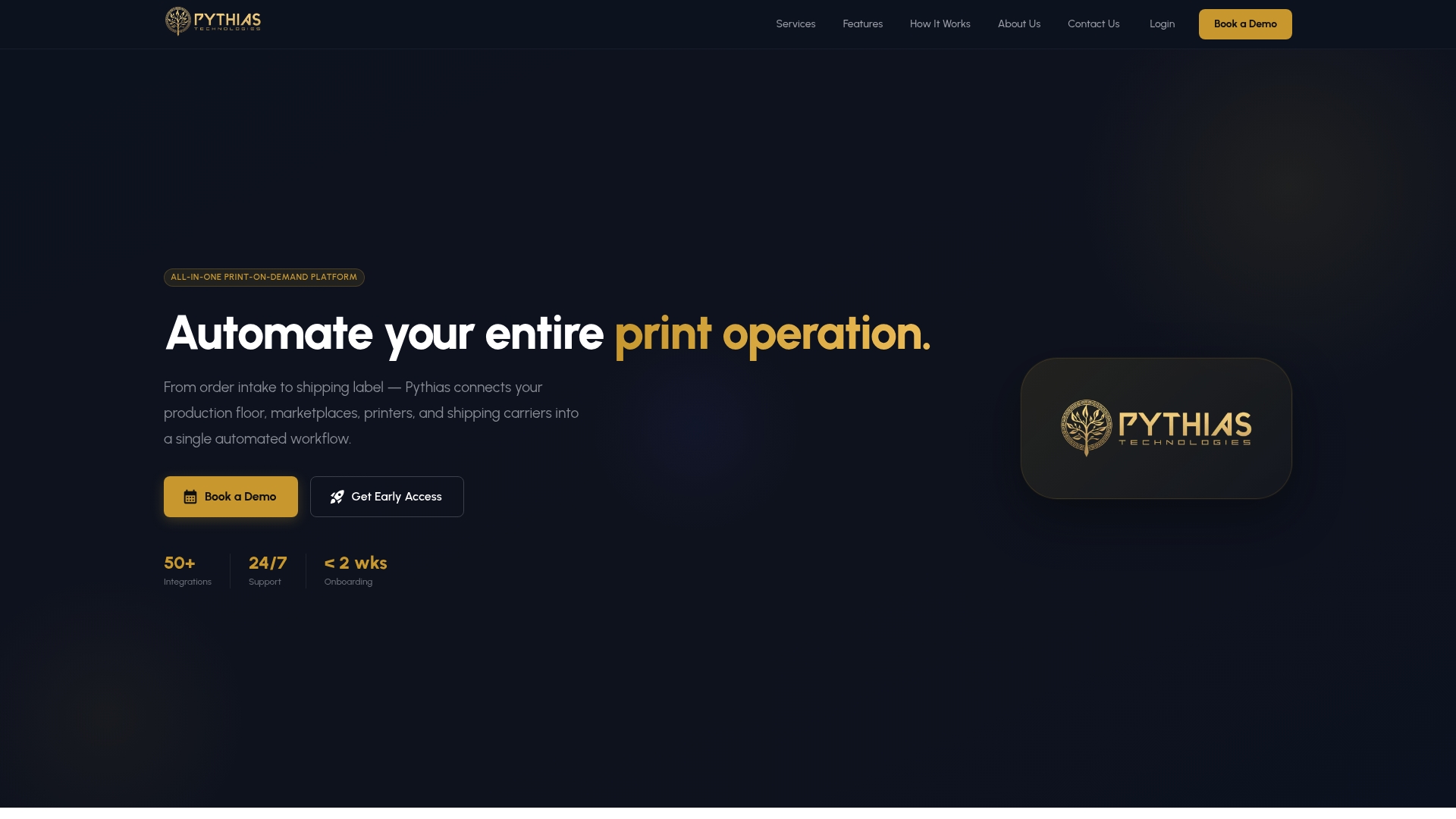
Explore how Pythiastechnologies can cut your setup time to under two weeks with dedicated onboarding support. Visit Pythiastechnologies to take control of your print-on-demand production automation and get started with streamlined order management and real-time inventory tracking today.
Frequently Asked Questions
What features make Pythias Technologies suitable for print-on-demand businesses?
Pythias Technologies offers automated production queue management, real-time inventory control, and unified order management across multiple platforms. These features reduce manual errors and increase efficiency, making it a strong option for businesses needing streamlined operations. To maximize its benefits, consider leveraging its 24/7 support for troubleshooting and guidance.
How does Pythias Technologies compare to DodgePrint in terms of listing automation?
DodgePrint excels with its Bulk Listing feature, which allows sellers to publish many SKUs across multiple marketplaces simultaneously, saving time. For businesses that need a more integrated approach where production and sales channels operate on a single dashboard, Pythias Technologies provides automation that helps manage orders from various retail platforms more effectively. This makes Pythias Technologies an excellent choice for those looking to unify their operations under one system.
Which platform best supports large print catalogs, Pythias Technologies or OrderMesh?
OrderMesh provides advanced order routing designed for scale, making it well-suited for businesses with large SKU sets. On the other hand, Pythias Technologies excels at onboarding swiftly with dedicated support, allowing print shops to start production quickly. For teams looking for a vendor that balances ease of setup with operational efficiency, Pythias Technologies is a solid option.
Can I expect rapid onboarding with alternatives like Pythias Technologies?
Pythias Technologies claims to complete onboarding in under two weeks, which supports quick production ramp-up. This feature can significantly benefit businesses looking to minimize downtime during the transition to a new platform, making it a favorable choice for print on demand operations.
What kind of competitor support can I access when using Pythias Technologies?
Pythias Technologies offers 24/7 support from a U.S.-based team, which is essential for resolving issues quickly. This availability ensures that any printer or shipping label issues can be addressed promptly, giving businesses peace of mind while they manage their operations.
Recommended
- Print on Demand Products: Top 10 for Entrepreneurs | Pythias Technologies | Pythias Technologies
- Pythias Technologies — Print-on-Demand Automation Platform
- Features | Pythias Technologies | Pythias Technologies
- Services | Pythias Technologies — Print-on-Demand Automation Platform | Pythias Technologies